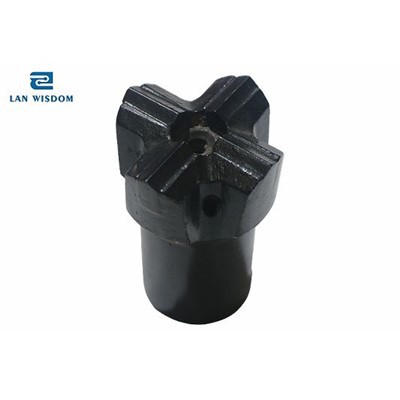
In the realm of rock drilling, encountering high - stress rock formations is a common yet challenging scenario. As a Button Bit supplier, I've witnessed firsthand the critical role these bits play in such demanding environments. In this blog, we'll delve into how Button Bits perform in high - stress rock formations, exploring their design, advantages, limitations, and real - world applications.
Understanding High - Stress Rock Formations
High - stress rock formations are characterized by extreme pressure, often due to deep burial, tectonic activity, or overlying rock masses. These rocks can be extremely hard, dense, and brittle, presenting significant challenges for drilling operations. Examples of high - stress rock formations include granite, basalt, and gneiss. The high stress within these rocks can cause them to fracture, spall, or deform during drilling, leading to increased wear on drill bits and reduced drilling efficiency.
Design Features of Button Bits for High - Stress Conditions
Button Bits are specifically designed to withstand the rigors of high - stress rock formations. The buttons, which are typically made of tungsten carbide, are the cutting elements of the bit. They are strategically placed on the bit face to optimize cutting performance.
- Button Shape and Size
- Different button shapes are available, such as spherical, conical, and parabolic. Spherical buttons are often preferred in high - stress rocks as they can distribute the cutting force more evenly, reducing the risk of button breakage. The size of the buttons also matters; larger buttons can withstand higher loads but may have a slower penetration rate, while smaller buttons can provide a faster penetration but may be more prone to wear.
- Bit Body Design
- The bit body is usually made of high - strength steel. It is designed to provide a stable platform for the buttons and to withstand the high axial and torsional forces during drilling. Some Button Bits have a tapered body design, which helps to reduce the contact area between the bit and the rock, minimizing friction and heat generation.
- Flushing System
- A proper flushing system is crucial in high - stress rock drilling. The flushing holes in the Button Bit allow the drilling fluid (usually water or air) to flow through the bit and carry the rock cuttings away from the cutting face. This helps to prevent the cuttings from clogging the bit and reduces the wear on the buttons.
Advantages of Button Bits in High - Stress Rock Formations
- High Penetration Rate
- Button Bits can achieve relatively high penetration rates in high - stress rocks compared to other types of drill bits. The sharp buttons can effectively break the rock, and the continuous rotation of the bit helps to remove the cuttings, allowing for a smooth drilling process.
- Long Service Life
- Thanks to the use of high - quality tungsten carbide buttons and a robust bit body design, Button Bits have a relatively long service life in high - stress rock formations. This reduces the frequency of bit changes, saving time and money in the drilling operation.
- Versatility
- Button Bits can be used in a variety of high - stress rock types. Whether it's hard granite or dense basalt, these bits can adapt to different rock properties and drilling conditions.
Limitations of Button Bits in High - Stress Rock Formations
- High Initial Cost
- Button Bits are generally more expensive than some other types of drill bits. The cost of the tungsten carbide buttons and the complex manufacturing process contribute to the higher price. However, considering their long service life and high performance, the overall cost - effectiveness can be quite good.
- Sensitivity to Misalignment
- In high - stress rock formations, any misalignment of the drill string can cause uneven wear on the Button Bit. This can lead to premature button failure and reduced drilling efficiency. Proper alignment of the drill rig and the drill string is essential to ensure the optimal performance of the Button Bit.
- Limited in Highly Fractured Rocks
- In highly fractured high - stress rocks, Button Bits may have some limitations. The fractures can cause the buttons to get stuck or break, and the drilling process may become unstable. In such cases, other types of drill bits or drilling techniques may need to be considered.
Real - World Applications
- Mining Industry
- In mining operations, especially in deep - level mines where high - stress rock formations are common, Button Bits are widely used for exploration drilling and production drilling. For example, in gold mines, Button Bits are used to drill blast holes in hard rock formations to extract the ore. The high penetration rate and long service life of Button Bits can significantly improve the productivity of the mining operation.
- Geothermal Drilling
- Geothermal drilling often involves drilling through high - stress rock formations at great depths. Button Bits are suitable for this application as they can withstand the high temperature and pressure conditions. The ability to achieve a high penetration rate is crucial in geothermal drilling to reduce the overall drilling time and cost.
- Infrastructure Construction
- In infrastructure projects such as tunnel construction and foundation drilling, Button Bits are used to drill through high - stress rocks. For example, when building a tunnel through a mountain, Button Bits can be used to drill the pilot holes and the main holes. Their versatility and performance in high - stress rocks make them an ideal choice for such projects.
Complementary Tools
When using Button Bits in high - stress rock formations, other tools can complement their performance. Steel Drill Rod is an essential component of the drill string. High - quality steel drill rods can provide the necessary strength and stability to transmit the drilling force from the drill rig to the Button Bit. They also help to maintain the alignment of the drill string, reducing the risk of bit misalignment.
Another related tool is the X Drill Bit. While Button Bits are excellent for general high - stress rock drilling, X Drill Bits may have specific advantages in certain situations. For example, in some highly abrasive high - stress rocks, the unique design of the X Drill Bit may offer better wear resistance and cutting performance.


Conclusion
Button Bits are a reliable and effective choice for drilling in high - stress rock formations. Their design features, such as the button shape, bit body design, and flushing system, are optimized to withstand the extreme conditions. Although they have some limitations, their advantages in terms of high penetration rate, long service life, and versatility make them a popular choice in various industries.
If you are involved in drilling operations in high - stress rock formations and are looking for high - quality Button Bits, feel free to explore our product range at Button Bit. We are committed to providing the best solutions for your drilling needs. Contact us to start a procurement discussion and find out how our Button Bits can enhance your drilling performance.
References
- Smith, J. (2018). Drilling Technology in High - Stress Rock Formations. Rock Drilling Journal, 25(3), 45 - 56.
- Johnson, R. (2019). The Design and Performance of Button Bits in Extreme Rock Conditions. Mining Engineering Review, 32(2), 67 - 78.
- Brown, T. (2020). Advances in Drilling Tools for High - Stress Rock Drilling. Geothermal Energy Research, 15(4), 89 - 98.