

In the realm of bus arbitration design, every component plays a crucial role in ensuring efficient and reliable operation. Among these components, the Chisel Bit stands out as a significant element that can greatly impact the overall performance of the system. As a Chisel Bit supplier, I have witnessed firsthand the importance of this tool in various applications, and I am excited to share my insights on its significance in bus arbitration design.
Understanding Bus Arbitration Design
Before delving into the significance of the Chisel Bit, it is essential to have a basic understanding of bus arbitration design. In a computer system, multiple devices often need to access a shared bus simultaneously. However, the bus can only handle one transaction at a time. Bus arbitration is the process of determining which device gets to use the bus when multiple devices request access. This process is crucial for preventing conflicts and ensuring that data is transferred efficiently between devices.
There are several arbitration methods, including centralized arbitration, decentralized arbitration, and hybrid arbitration. Each method has its own advantages and disadvantages, and the choice of arbitration method depends on the specific requirements of the system. Regardless of the arbitration method used, the goal is to minimize the time it takes to resolve conflicts and maximize the utilization of the bus.
The Role of Chisel Bit in Bus Arbitration Design
The Chisel Bit plays a vital role in bus arbitration design by providing a reliable and efficient way to transmit signals between devices. In a bus arbitration system, the Chisel Bit is used to represent the priority of each device requesting access to the bus. Devices with higher priority are assigned a higher Chisel Bit value, while devices with lower priority are assigned a lower value.
When a device requests access to the bus, it sends a request signal along with its Chisel Bit value. The arbitration logic then compares the Chisel Bit values of all the requesting devices and grants access to the device with the highest priority. This process ensures that the bus is used efficiently and that high-priority devices are given preferential treatment.
In addition to its role in determining priority, the Chisel Bit also helps to reduce the complexity of the arbitration logic. By using a single bit to represent the priority of each device, the arbitration logic can be simplified, resulting in a more compact and efficient design. This is particularly important in systems where space and power consumption are limited.
Advantages of Using Chisel Bit in Bus Arbitration Design
There are several advantages to using the Chisel Bit in bus arbitration design. Firstly, it provides a simple and effective way to prioritize devices. By assigning a single bit to each device, the arbitration logic can easily compare the priorities of different devices and make a decision quickly. This helps to reduce the arbitration time and improve the overall performance of the system.
Secondly, the Chisel Bit is highly scalable. As the number of devices in the system increases, the arbitration logic can easily accommodate the additional devices by simply adding more Chisel Bits. This makes it suitable for use in large-scale systems where multiple devices need to access the bus simultaneously.
Thirdly, the Chisel Bit is a cost-effective solution. Compared to other arbitration methods, such as using multiple lines to represent priority, the Chisel Bit requires less hardware and consumes less power. This makes it an attractive option for designers who are looking to reduce the cost and power consumption of their systems.
Applications of Chisel Bit in Bus Arbitration Design
The Chisel Bit has a wide range of applications in bus arbitration design. It is commonly used in computer systems, such as desktop computers, laptops, and servers, to manage the access to the system bus. In these systems, the Chisel Bit helps to ensure that high-priority tasks, such as CPU access to memory, are given preferential treatment over low-priority tasks, such as peripheral device access.
The Chisel Bit is also used in embedded systems, such as automotive electronics, industrial control systems, and consumer electronics. In these systems, the Chisel Bit helps to manage the access to the internal bus, ensuring that critical functions, such as engine control in a car or data processing in a smart home device, are given priority over non-critical functions.
Related Products and Their Importance
In addition to the Chisel Bit, there are other related products that are important in bus arbitration design. One such product is the Cross Drill Bit. The Cross Drill Bit is used to create holes in hard materials, such as rock and metal. In the context of bus arbitration design, the Cross Drill Bit can be used to create holes for the installation of electrical components, such as connectors and sensors.
Another important product is the Steel Drill Rod. The Steel Drill Rod is used to transmit the drilling force from the drill to the drill bit. In bus arbitration design, the Steel Drill Rod can be used to support the installation of electrical components, ensuring that they are securely fixed in place.
The Chisel Bit itself is also an important product in bus arbitration design. As a Chisel Bit supplier, I understand the importance of providing high-quality Chisel Bits that are reliable and durable. Our Chisel Bits are made from high-grade materials and are designed to withstand the harsh conditions of bus arbitration design applications.
Conclusion and Call to Action
In conclusion, the Chisel Bit plays a significant role in bus arbitration design by providing a reliable and efficient way to prioritize devices and transmit signals between them. Its simplicity, scalability, and cost-effectiveness make it an attractive option for designers who are looking to improve the performance of their systems.
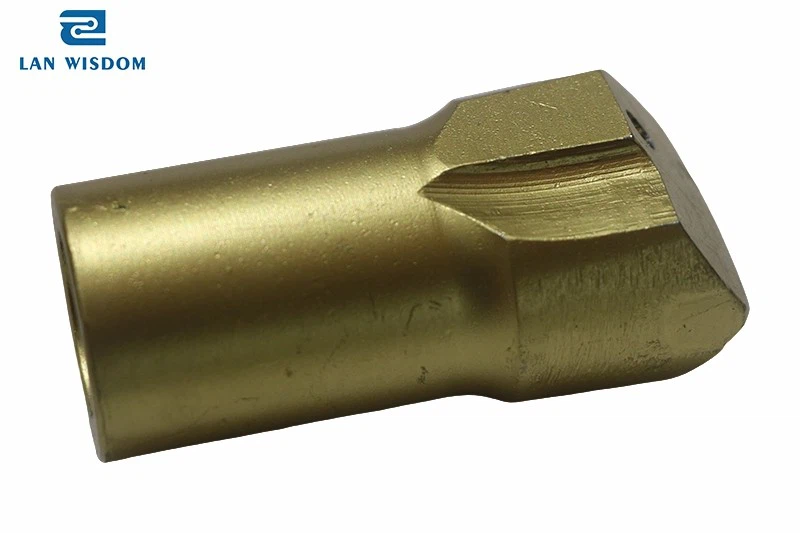

If you are in the market for high-quality Chisel Bits or other related products for your bus arbitration design project, I encourage you to reach out to us. We have a wide range of products to meet your specific needs, and our team of experts is always ready to provide you with the support and guidance you need. Contact us today to start the procurement process and take your bus arbitration design to the next level.
References
- Stallings, W. (2018). Computer Organization and Architecture: Designing for Performance. Pearson.
- Tanenbaum, A. S., & Bos, H. (2015). Modern Operating Systems. Pearson.
- Patterson, D. A., & Hennessy, J. L. (2017). Computer Organization and Design: The Hardware/Software Interface. Morgan Kaufmann.
