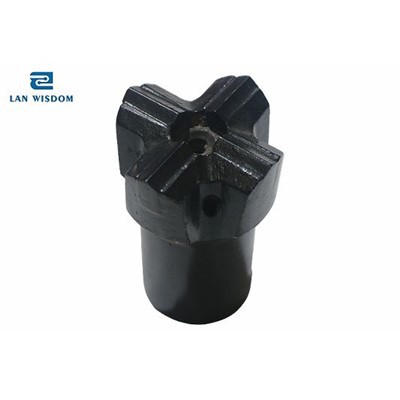
Button bits are essential tools in various industries, particularly in mining, quarrying, and drilling operations. They play a crucial role in breaking through hard rock and other tough materials. The materials used to make button bits significantly affect their performance, durability, and suitability for different applications. As a button bit supplier, I am well - versed in the various materials that go into the production of these vital tools. In this blog, I will explore the key materials commonly used in button bit manufacturing.
Tungsten Carbide
Tungsten carbide is perhaps the most widely used material in button bit production. It is a composite material composed of tungsten and carbon atoms, which form extremely hard and wear - resistant particles. These particles are typically bonded together using a metal binder, usually cobalt.
The hardness of tungsten carbide is one of its most significant advantages. It can withstand the high pressures and abrasion encountered during drilling operations. This hardness allows button bits made of tungsten carbide to penetrate hard rock formations with relative ease. For example, in granite mining, where the rock is extremely hard, tungsten carbide button bits are the go - to choice.
Another advantage of tungsten carbide is its high heat resistance. Drilling generates a significant amount of heat due to friction between the bit and the rock. Tungsten carbide can maintain its hardness and shape even at high temperatures, preventing premature wear and failure of the bit.
However, tungsten carbide also has some limitations. It is relatively brittle compared to some other materials. In applications where the bit is subjected to high - impact forces, such as in certain types of blasting - assisted drilling, there is a risk of the tungsten carbide buttons chipping or cracking. To mitigate this, manufacturers often optimize the binder content and the grain size of the tungsten carbide particles to improve its toughness.
When sourcing tungsten carbide for button bit production, it is crucial to ensure high - quality raw materials. The purity of tungsten and carbon, as well as the quality of the cobalt binder, can significantly impact the performance of the final product. As a button bit supplier, we work closely with trusted tungsten carbide suppliers to ensure that our button bits meet the highest standards of quality and performance.
Steel
Steel is another important material used in button bit manufacturing, mainly for the bit body. The bit body provides the structural support for the tungsten carbide buttons and connects the bit to the Steel Drill Rod.
There are different types of steel used for button bit bodies, depending on the specific requirements of the application. High - strength alloy steels are commonly used because they offer a good balance of strength, toughness, and wear resistance. These steels can withstand the high stresses and forces generated during drilling.
One of the advantages of using steel for the bit body is its machinability. It can be easily shaped and formed into the desired design of the button bit. This allows for the production of complex bit geometries that are optimized for different drilling conditions. For example, some button bits have specially designed flutes on the bit body to improve the removal of cuttings from the borehole.
Steel also has good weldability, which is important for attaching the tungsten carbide buttons to the bit body. A strong and reliable weld is essential to ensure that the buttons remain firmly in place during drilling operations.
However, steel is more prone to corrosion compared to tungsten carbide. In wet drilling conditions or in environments with high humidity, the bit body may rust, which can reduce its strength and performance over time. To prevent corrosion, manufacturers often apply protective coatings to the steel bit body, such as zinc plating or epoxy coatings.
Diamond
Diamond is the hardest known natural material, making it an excellent choice for button bit applications where extreme wear resistance is required. Diamond - impregnated button bits are used in very hard and abrasive rock formations, such as quartzite and some types of volcanic rock.
In diamond - impregnated button bits, small diamond particles are embedded in a metal matrix. The metal matrix holds the diamond particles in place and provides support during drilling. The diamond particles act as cutting edges, allowing the bit to penetrate the hard rock with minimal wear.
The main advantage of diamond - impregnated button bits is their extremely long service life. They can drill through large volumes of hard rock without significant wear, which reduces the frequency of bit changes and increases overall productivity. However, diamond - impregnated button bits are also more expensive than tungsten carbide and steel - based button bits.
The manufacturing process of diamond - impregnated button bits is more complex compared to other types of button bits. It requires precise control of the diamond particle size, concentration, and distribution in the metal matrix. The quality of the diamond particles also plays a crucial role in the performance of the bit. As a button bit supplier, we carefully select high - quality diamond particles and use advanced manufacturing techniques to ensure the best performance of our diamond - impregnated button bits.
Polycrystalline Diamond Compact (PDC)
Polycrystalline Diamond Compact (PDC) is a synthetic material that combines the hardness of diamond with the toughness of a carbide substrate. PDC button bits are widely used in oil and gas drilling, as well as in some mining and construction applications.
PDC buttons consist of a layer of polycrystalline diamond bonded to a tungsten carbide substrate. The diamond layer provides the cutting edge, while the tungsten carbide substrate provides support and mechanical strength. This combination allows PDC button bits to cut through hard rock formations efficiently while also withstanding the high - impact forces encountered during drilling.


One of the advantages of PDC button bits is their high rate of penetration. They can drill faster than traditional tungsten carbide button bits in many applications. This increased drilling speed can significantly reduce the overall drilling time and cost.
However, PDC button bits are sensitive to high temperatures and sudden changes in pressure. In some drilling conditions, such as deep - hole drilling or drilling in formations with high gas content, special care must be taken to prevent overheating and damage to the PDC buttons.
Ceramic
Ceramic materials are sometimes used in button bit manufacturing, especially for applications where high - temperature resistance and chemical inertness are required. Ceramics can withstand very high temperatures without losing their hardness, making them suitable for some extreme drilling conditions.
Ceramic button bits are typically made of materials such as alumina or silicon carbide. These materials have a high melting point and are chemically stable, which means they can resist corrosion and wear in harsh environments.
However, ceramics are brittle materials, and they are more prone to cracking and chipping compared to tungsten carbide and steel. To improve the toughness of ceramic button bits, manufacturers often use composite materials or add toughening agents during the manufacturing process.
Conclusion
In conclusion, the materials used to make button bits play a crucial role in determining their performance, durability, and suitability for different applications. Tungsten carbide is the most commonly used material for the cutting buttons due to its hardness and wear resistance. Steel is used for the bit body to provide structural support, and diamond, PDC, and ceramic are used in specialized applications where extreme performance is required.
As a button bit supplier, we understand the importance of using high - quality materials and advanced manufacturing techniques to produce button bits that meet the diverse needs of our customers. Whether you are involved in mining, quarrying, oil and gas drilling, or construction, we have the right button bit solution for you.
If you are in the market for high - quality button bits, Chisel Bit, Cross Drill Bit, or other rock - drilling tools, we invite you to contact us for a detailed discussion about your requirements. Our team of experts is ready to assist you in selecting the most suitable materials and products for your specific applications. Let's start this valuable business conversation and explore how our button bits can enhance your drilling operations.
References
- "Rock Drilling Tools Handbook" - A comprehensive guide on the materials and manufacturing processes of rock - drilling tools.
- Industry research papers on the performance and application of different materials in button bit production.