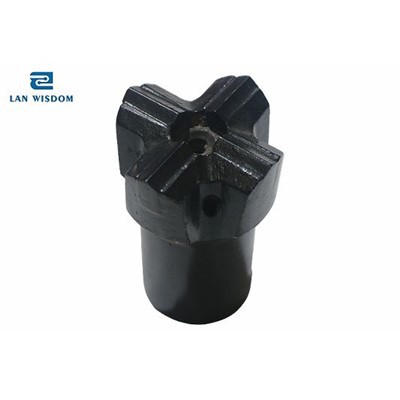
Hey there! As a supplier of X Drill Bit, I've been getting a lot of questions lately about the speed - feed relationship for these bits. So, I thought I'd sit down and write this blog to share what I know.
First off, let's talk about what speed and feed mean in the context of drill bits. The speed of a drill bit refers to how fast it rotates, usually measured in revolutions per minute (RPM). On the other hand, the feed rate is how quickly the drill bit moves into the material being drilled, often measured in inches per minute (IPM).
Now, why is the relationship between speed and feed so important? Well, getting this relationship right can make a huge difference in the performance of your X Drill Bit. If the speed is too high and the feed rate is too low, the drill bit can overheat. This overheating can cause the bit to wear out quickly, reduce its cutting efficiency, and even lead to breakage. On the flip side, if the speed is too low and the feed rate is too high, the drill bit might not cut properly. It could get stuck in the material, cause rough holes, and also put unnecessary stress on the drilling equipment.
So, how do you determine the right speed - feed relationship for an X Drill Bit? It depends on several factors.
Material being drilled
The type of material you're drilling into is one of the most crucial factors. Different materials have different hardness levels, and this affects how the drill bit interacts with them. For example, if you're drilling into soft materials like wood or plastic, you can generally use a higher speed and a higher feed rate. Wood is relatively easy to cut through, so the drill bit can rotate quickly and move into the material at a decent pace without much trouble.
On the other hand, when drilling into hard materials like metal or granite, you'll need to slow things down. Metals, especially high - strength alloys, can be very tough on drill bits. A high speed could cause the bit to dull rapidly due to the intense friction, and a high feed rate might break the bit. So, for hard materials, a lower speed and a lower feed rate are usually recommended.
Drill bit size
The size of the X Drill Bit also plays a role. Smaller drill bits can usually handle higher speeds because they have less mass and less surface area in contact with the material. For instance, a 1/8 - inch drill bit can rotate at a much higher RPM than a 1 - inch drill bit. Larger drill bits, however, need to be run at lower speeds to prevent excessive heat buildup and to ensure proper cutting.
Coating and design of the drill bit
Our X Drill Bit comes with special coatings and a unique design that can influence the speed - feed relationship. Some coatings, like titanium nitride, can reduce friction and increase the bit's durability. This means you might be able to use a slightly higher speed or feed rate compared to an uncoated bit. The design of the bit, such as the number and shape of the flutes, also affects how it cuts through the material. Bits with more flutes can often handle higher feed rates because they can remove chips more efficiently.
Let's take a look at some general guidelines for different materials:
Drilling wood
For softwoods like pine, you can start with a speed of around 3000 - 4000 RPM and a feed rate of 10 - 20 IPM. For hardwoods like oak, a speed of 2000 - 3000 RPM and a feed rate of 5 - 15 IPM is a good starting point. You can adjust these values based on the actual performance of the X Drill Bit. If the bit is overheating or the holes are rough, you might need to lower the speed or feed rate.
Drilling metal
When drilling mild steel, a speed of 500 - 1000 RPM and a feed rate of 0.001 - 0.005 IPM per revolution is a common range. For stainless steel, which is harder, you'll want to go even lower, around 200 - 500 RPM and a feed rate of 0.0005 - 0.002 IPM per revolution.
Drilling stone
For softer stones like limestone, a speed of 100 - 300 RPM and a feed rate of 0.1 - 0.5 IPM can work well. For harder stones like granite, you'll need to reduce the speed to 50 - 150 RPM and the feed rate to 0.05 - 0.2 IPM.
It's important to note that these are just guidelines. The best way to find the optimal speed - feed relationship for your specific application is through testing. Start with the recommended values and make small adjustments based on how the X Drill Bit performs.
Now, let's compare the X Drill Bit with other types of drill bits. Button Bit and Chisel Bit are two common alternatives.

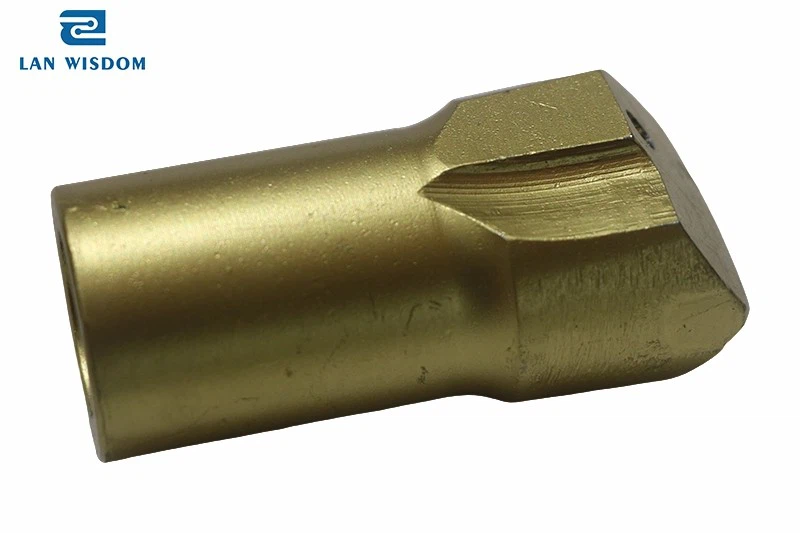
Button bits are often used for rock drilling. They have small, round buttons on the cutting edge. Compared to the X Drill Bit, button bits might require a different speed - feed relationship. Button bits are designed to break the rock by impact, so they usually work better at lower speeds and higher feed rates when drilling hard rock.
Chisel bits, on the other hand, have a flat, chisel - shaped cutting edge. They are commonly used for softer materials and light - duty drilling. Chisel bits can sometimes handle higher speeds than the X Drill Bit when working with soft materials, but they might not be as efficient for more demanding applications.
In conclusion, understanding the speed - feed relationship for an X Drill Bit is essential for getting the best performance out of it. By considering factors like the material being drilled, the bit size, and the bit's coating and design, you can find the optimal combination of speed and feed.
If you're in the market for high - quality drill bits and want to learn more about how our X Drill Bit can meet your needs, don't hesitate to reach out. We're here to help you make the right choice for your drilling projects. Whether you're a professional contractor or a DIY enthusiast, we've got the expertise and the products to support you.
References
- "Drilling Handbook" by Industrial Drilling Association
- "Materials Science and Engineering for Drilling Applications" by Academic Press