


In the field of rock drilling and excavation, choosing the right drill bit directly impacts efficiency, cost, and project outcomes. Cross-type drill bits and conventional drill bits represent two distinct solutions, each optimized for different scenarios. Below, we break down their core differences, paired with visual examples of industry-standard products.
1. Structural Design
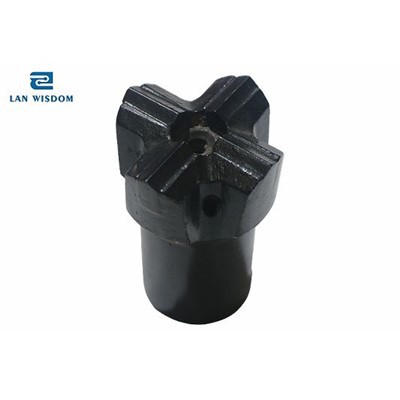
Cross-Type Drill Bit (as shown in Figure 2)
The cross-type drill bit features a four-blade, cross-shaped cutting head that is forged from high-strength alloy steel. This design creates four sharp cutting edges and a central pilot hole. This helps guide the bit into the rock, preventing wandering during drilling. The robust, symmetrical structure also evenly distributes impact force across all blades, reducing localized wear.
Conventional Drill Bit
Most conventional drill bits, such as twist or flat-head types, rely on a single or dual cutting edge design. They lack the cross bit's reinforced multi-blade structure and central pilot point. This makes them more prone to deflection when working on hard, uneven rock surfaces.
2. Drilling Performance & Application
Cross-Type Drill Bit
• Hard Rock Specialist: Its multi-edge design excels in granite, basalt, and other high-abrasion rock formations. It can withstand the high impact of down-the-hole (DTH) hammers and top-hammer drills.
• Stability & Speed: The cross-shaped head ensures stable penetration, minimizing vibration. This leads to faster drilling progress and straighter boreholes, which is critical for anchoring and blasting projects.
• Ideal for: Mining, tunneling, quarrying, and foundation engineering where precision and durability are essential. It pairs seamlessly with threaded drill rods (as shown in Figure 1) for deep-hole drilling.
Conventional Drill Bit
• Soft to Medium Rock Focus: Conventional bits are better suited for softer rock, concrete, or soil. They are less effective on hard, abrasive materials due to their simpler cutting structure.
• General-Purpose Use: They are common in construction, home improvement, and light excavation tasks. These tasks do not require the extreme durability of cross-type bits.
3. Wear Resistance & Service Life
Cross-Type Drill Bit
The cross bit's blades are typically treated with tungsten carbide overlay or heat treatment. This enhances hardness and wear resistance, extending its service life in harsh conditions. Its symmetrical design also allows for regrinding of the cutting edges, reducing replacement costs over time.
Conventional Drill Bit
Conventional bits often use basic steel or surface coating. They wear faster when exposed to hard rock, leading to more frequent replacements and higher long-term costs for heavy-duty projects.

4. Compatibility with Drilling Systems
Cross-Type Drill Bit
It is engineered to connect with threaded drill rods (like the one in Figure 1). This creates a rigid, high-torque assembly ideal for deep-hole and high-impact drilling. The threaded connection ensures the bit stays securely attached even under intense vibration.
Conventional Drill Bit
Most conventional bits use a straight shank or SDS-plus connection. These are designed for handheld or light-duty rigs, which cannot handle the forces generated by cross-type bit applications.
Conclusion
For projects involving hard rock, precision drilling, or high-volume excavation, the cross-type drill bit is the clear choice. Its robust design, superior stability, and compatibility with professional drilling systems deliver unmatched performance. In contrast, conventional drill bits remain a cost-effective option for lighter, less demanding tasks. By understanding these differences, you can select the optimal tool to maximize productivity and minimize downtime on your next drilling project.


