What is the drilling speed of a drill rig? This is a question that many customers often ask when they are considering purchasing a drill rig. As a drill rig supplier, I am more than happy to share some insights on this topic.
Understanding Drilling Speed
Drilling speed, often measured in feet per hour (ft/h) or meters per hour (m/h), refers to how quickly a drill rig can penetrate the ground to create a borehole. It is a crucial factor as it directly impacts the efficiency and cost - effectiveness of a drilling project. A higher drilling speed means that more work can be completed in less time, reducing labor costs and overall project duration.
However, the drilling speed is not a fixed value. It can vary significantly depending on several factors.
Factors Affecting Drilling Speed
1. Geological Conditions
The type of soil or rock formation being drilled through is one of the most significant factors. For example, drilling through soft soils such as clay or sand is much faster than drilling through hard rocks like granite or basalt. In soft soils, a drill rig can achieve speeds of up to 100 - 200 ft/h or even more. On the other hand, when dealing with hard rocks, the speed may drop to as low as 10 - 30 ft/h.
2. Drill Bit Design
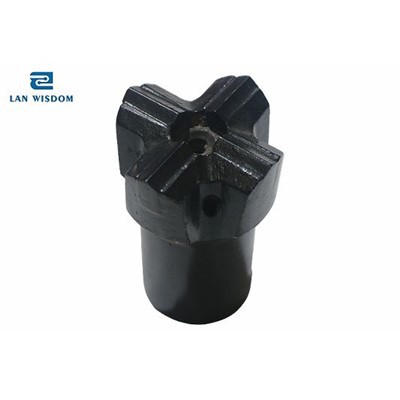
The design and quality of the drill bit play a vital role. A well - designed drill bit can cut through the ground more efficiently, increasing the drilling speed. Different types of drill bits are suitable for different geological conditions. For instance, a roller cone bit is effective for drilling through sedimentary rocks, while a diamond - impregnated bit is better for hard and abrasive formations.
3. Drill Rig Power and Capacity
The power of the drill rig's engine and its overall capacity determine how much force it can apply to the drill bit. A more powerful drill rig can generally achieve a higher drilling speed. Drill rigs come in various sizes and power ratings, from small, portable units suitable for light - duty applications to large, heavy - duty rigs used in major construction and mining projects.


4. Hydraulic System
The hydraulic system of the drill rig is responsible for controlling the movement of the drill string and the application of pressure to the drill bit. A well - functioning hydraulic system with high - flow rates and precise control can enhance the drilling speed by ensuring smooth and efficient operation.
Drilling Speed in Different Applications
Water Well Drilling
In water well drilling, the target is usually to reach an aquifer at a certain depth. The drilling speed can vary depending on the local geology. In areas with relatively soft sedimentary layers, a drill rig can drill a water well at a speed of around 50 - 100 ft/h. However, if there are hard rock layers in the way, the speed will be much lower.
Mineral Exploration
Mineral exploration involves drilling to sample different rock layers to determine the presence and quantity of minerals. Since the target is often deep - seated and may involve drilling through hard rocks, the drilling speed is generally slower compared to other applications. It can range from 10 - 50 ft/h, depending on the complexity of the geological structure.
Construction Foundation Drilling
For construction foundation drilling, the drill rig needs to create boreholes for piles. The drilling speed depends on the size and depth of the boreholes as well as the soil or rock conditions at the construction site. In urban areas where the soil is often a mixture of fill materials and natural soils, the drilling speed can be around 30 - 80 ft/h.
Our Drill Rigs and Drilling Speed
As a drill rig supplier, we offer a wide range of drill rigs designed to meet different customer needs. Our drill rigs are equipped with high - power engines and advanced hydraulic systems to ensure efficient drilling. We also provide a variety of drill bits to match different geological conditions, which helps to optimize the drilling speed.
For example, our Disc Drill Rig is specifically designed for certain types of soil and rock formations. It features a powerful engine and a state - of - the - art hydraulic system, allowing it to achieve a relatively high drilling speed in its suitable applications.
Improving Drilling Speed
To improve the drilling speed, it is essential to conduct a detailed geological survey before starting the drilling project. This will help in selecting the most appropriate drill rig and drill bit. Regular maintenance of the drill rig, including checking the engine, hydraulic system, and drill bit, is also crucial to ensure optimal performance.
In addition, proper training of the drill rig operators is necessary. Skilled operators can make better use of the drill rig's features and adjust the drilling parameters according to the actual situation, thereby increasing the drilling speed.
Conclusion
The drilling speed of a drill rig is a complex concept influenced by multiple factors. Understanding these factors and how they interact is essential for anyone involved in drilling projects. As a drill rig supplier, we are committed to providing our customers with high - quality drill rigs that can achieve efficient drilling speeds.
If you are in the market for a drill rig and want to learn more about how our products can meet your specific requirements in terms of drilling speed and other performance indicators, we invite you to contact us for a detailed discussion. Our team of experts is ready to assist you in selecting the most suitable drill rig for your project and provide you with all the necessary technical support.
References
- American Petroleum Institute (API) Standards on Drilling Equipment
- Drilling Engineering Handbook by John P. Graves
- Geotechnical Engineering Principles and Practices by Braja M. Das